
Using artificial intelligence to understand, predict, and respond to biodiversity change.
The Conservation AI Lab is Robin Freeman's academic group at the Institute of Zoology, Zoological Society of London. We combine ecology, machine learning, and conservation research to recover meaningful signals from complex ecological data — and turn them into outputs and tools to support timely, evidence-based decisions.
Our work spans animal movement and behaviour, biodiversity indicators, camera traps, acoustics, citizen science, and biodiversity forecasting. We treat AI as part of ecological inference, not an end in itself — the goal is to quantify change, identify its drivers, and anticipate what comes next, with outputs that are usable in research, policy, and practice.
My research sits at the intersection of ecology, artificial intelligence and conservation, developing new ways to measure, understand and forecast change in natural systems.
I work across scales, from predicting the behaviour of individual animals using biologging and machine learning, to analysing global biodiversity datasets containing millions of observations. A common theme is using AI and novel data streams to reveal patterns that might otherwise remain hidden, turning ecological data into actionable evidence for conservation.
Ecological data are expanding rapidly, but conservation decisions still often arrive too late. We build methods that close that gap: forecasting models informing global biodiversity policy targets; machine learning to extract animal behaviour from sensors and loggers; population trend tools used in the Living Planet Report.
Research themes
A selection of current and recent themes — see the research page for more details.
Predicting trends in global abundance
Building models that move beyond retrospective indicators to forecast biodiversity trajectories. Current work focuses on what drives recovery as well as decline, and on making uncertainty explicit in global biodiversity assessments.
Drivers of global biodiversity change
Understanding how climate, land use, exploitation, and cumulative pressures interact to shape wildlife population trends. Recent work shows that ecological lags mean present-day conditions often explain less than the history of past pressures.
Indian Ocean seabird movement and behaviour
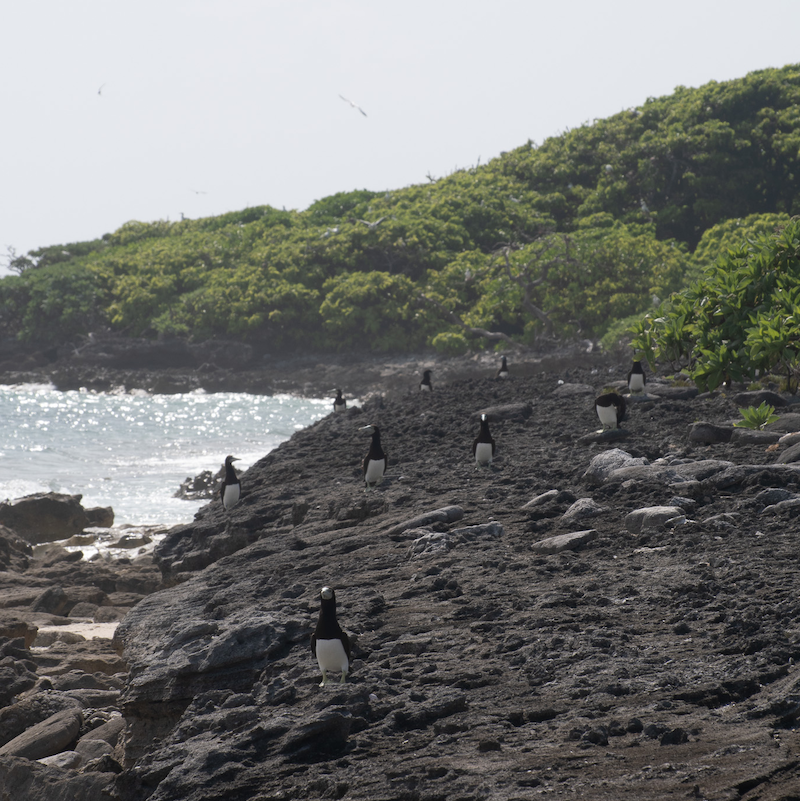
Tracking red-footed boobies, wedge-tailed shearwaters, and other species across the Chagos Archipelago and Indian Ocean to understand foraging, migration, and how marine protected areas can be designed around real movement data.
Automatic recognition of individual animals
Developing computer vision workflows to identify individual animals from camera trap and biologging data, improving monitoring efficiency and opening new questions about behaviour and demography at scale.
Monitoring behaviour in the wild
Using lightweight sensors and scalable analytics to recover ecologically meaningful behaviour with minimal animal impact, including combining sensors with modern machine learning techniques.
Public awareness of biodiversity
Using digital trace data and conservation culturomics to understand how biodiversity enters public consciousness — and what that means for conservation communication and support.